
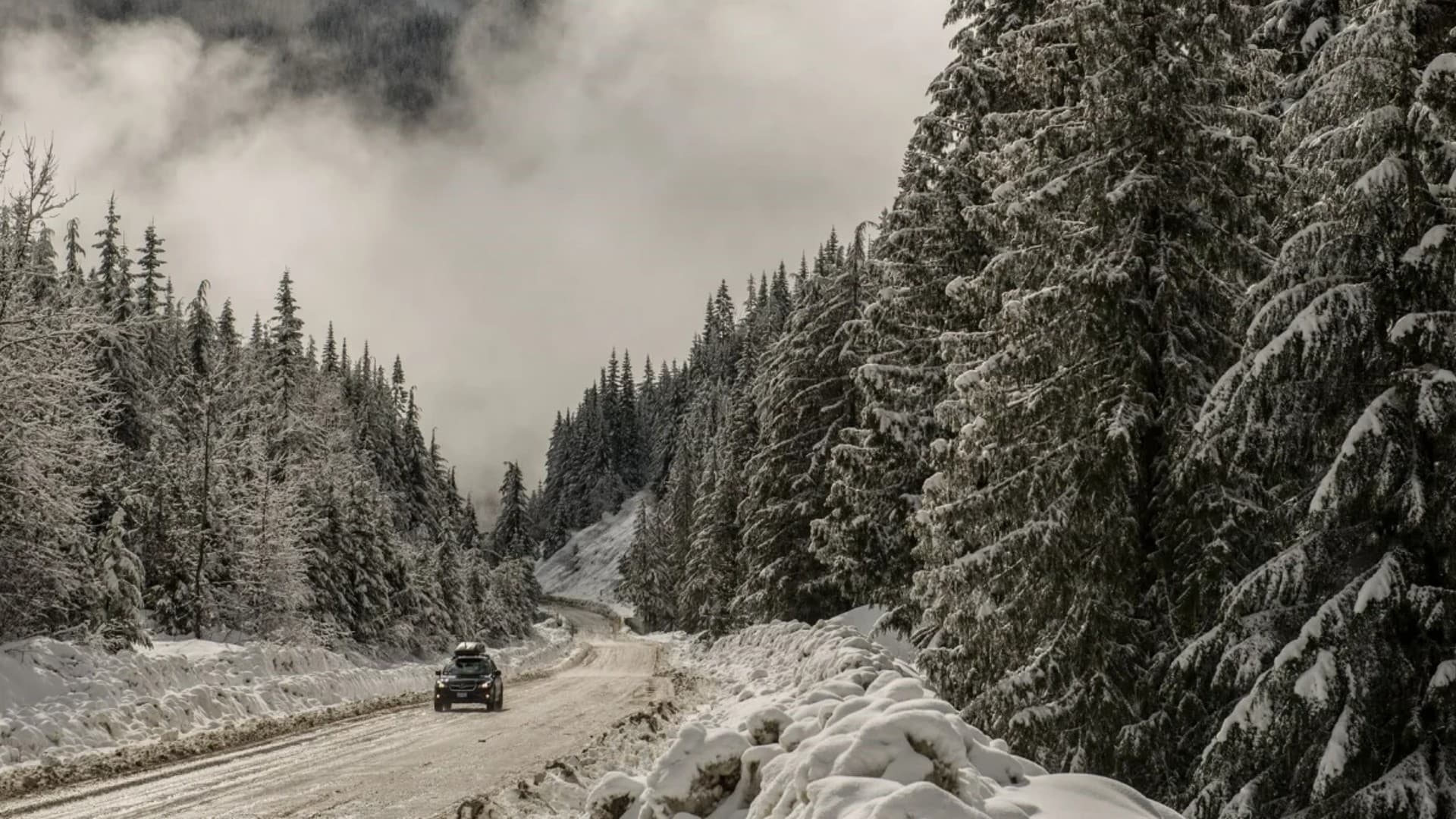
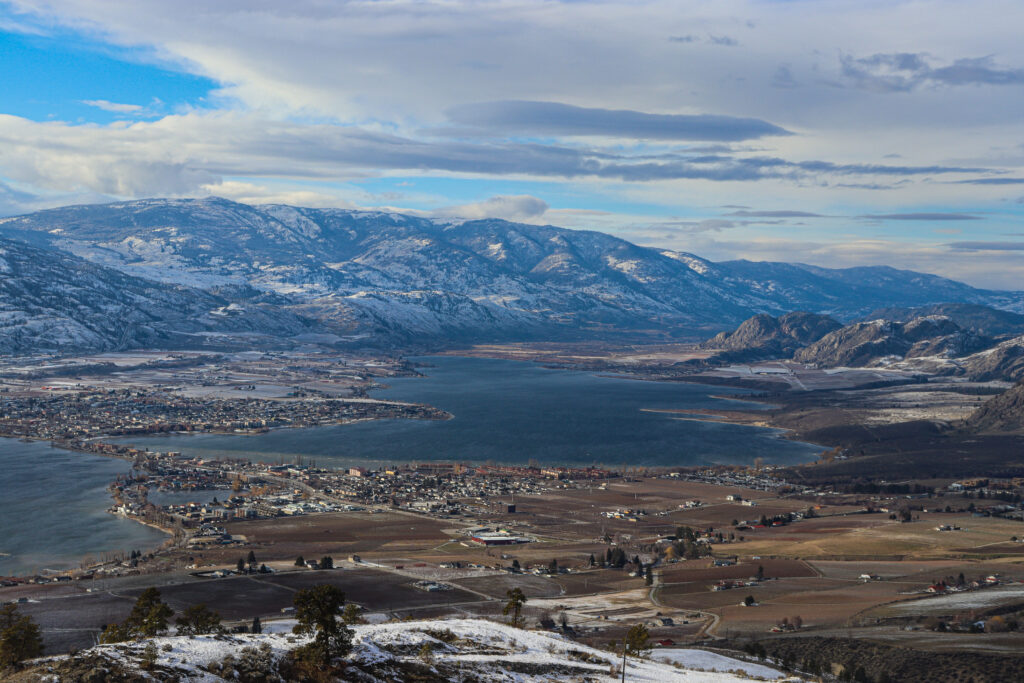
While Osoyoos is famous for its warm weather, sunny skies, and lakeside lifestyle, winter brings snow, ice, and colder temperatures to the region—including the surrounding highways and mountain passes.
If you’re planning a winter getaway to Osoyoos, it’s important to be prepared for changing road conditions. Major routes into the South Okanagan, including Highway 3, Highway 97, and the Coquihalla, can all experience winter driving conditions.
Before you hit the road, make sure your vehicle is winter-ready, check the latest road conditions, and pack essential emergency supplies. A little preparation goes a long way in helping you arrive safely and enjoy everything Osoyoos has to offer.
Prepare Your Vehicle
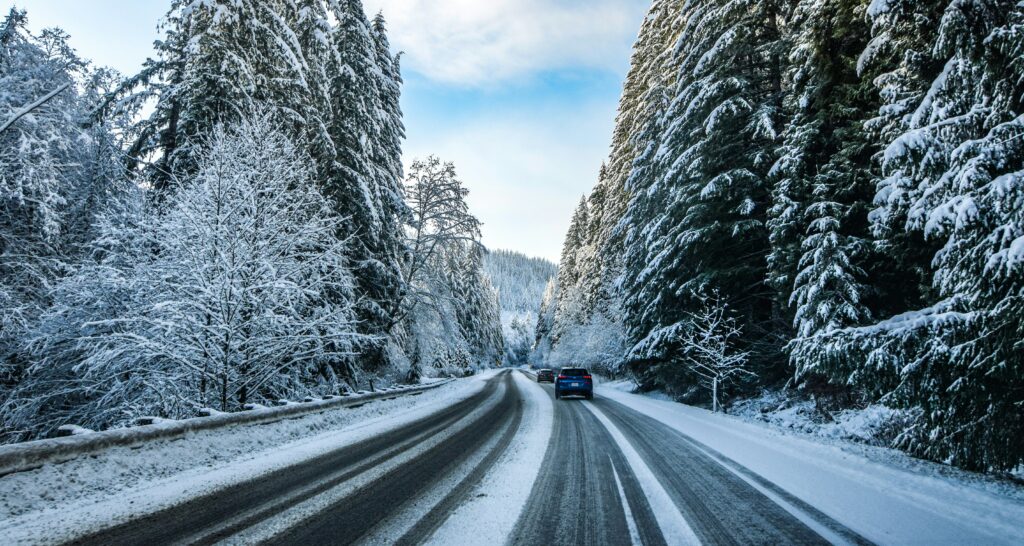
Photo by Engin Yapici on Unsplash
A well-prepared vehicle is your first step toward a safe winter journey.
Install Winter Tires
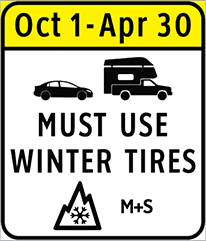
Use four matching winter tires displaying the Three-Peaked Mountain Snowflake symbol, with at least 3.5 mm of tread, even if you drive a 4×4 vehicle. While M+S (Mud and Snow) tires meet the legal requirement, they don’t provide the same level of traction as certified winter tires in snow and ice.
Winter tires or chains are required on most British Columbia highways from October 1 to March 31, with some mountain passes and high-elevation routes requiring them until April 30.
Schedule a Winter Maintenance Check
Before your trip, have your vehicle inspected to ensure your battery, brakes, windshield wipers, fluids, lights, and heating system are ready for winter conditions.
Pack an Emergency Kit
Carry a winter emergency kit that includes warm clothing, blankets, food, water, a flashlight, first-aid supplies, booster cables, a shovel, and any other essentials you may need if your trip is delayed.
Clear Snow and Ice
Before driving, completely remove snow and ice from your windows, mirrors, lights, hood, and roof. Allow your windshield to fully defrost before setting off so you have clear visibility in every direction.
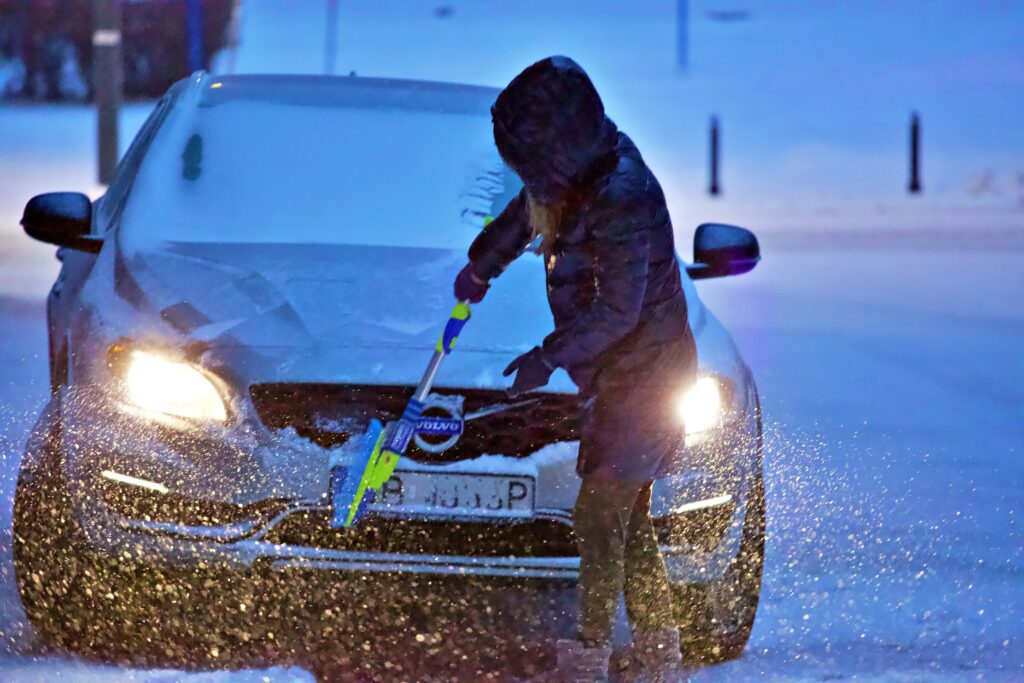
Photo by Gaith Shalan on Unsplash
Charge Your Phone
Bring a fully charged cell phone and a vehicle charger or power bank so you can stay connected in case of delays or emergencies.
Prepare Yourself
Safe winter driving starts with the driver.
- Slow down and adjust your speed to match current road conditions. Remember, posted speed limits apply only under ideal conditions.
- Leave at least a four-second following distance between you and the vehicle ahead.
- Know how to brake safely and recover from a skid before you encounter slippery roads.
- Be extra cautious when passing large trucks, as snow and spray can significantly reduce visibility.
- Never pass a snowplow on the right, as this is where snow is discharged.
- Build your confidence by taking the free online Shift Into Winter: Practical BC Winter Driving Tips webinar.
Plan Ahead
A few minutes of planning before you leave can make your trip safer and less stressful.
- Check current weather forecasts and road conditions before you depart.
- Allow extra travel time and avoid rushing.
- Choose the safest route for current conditions.
- Let a friend or family member know your travel plans and expected arrival time.
- If conditions become severe, consider postponing your trip until the weather improves.
- If your vehicle becomes stranded, stay with it and wait for assistance.
Winter is a beautiful time to visit Osoyoos, and with a little preparation, you’ll be ready to travel safely and enjoy everything the South Okanagan has to offer.
For more information about how to prepare for driving this winter, visit www.ShiftIntoWinter.ca